


During these historic days of April, as we head towards the 50th Anniversary of the Liberation of the South and National Reunification (April 30, 1975 – April 30, 2025), the Independence Palace—a Special National Monument linked to a sacred milestone in our nation’s history—is attracting a vast number of domestic and international visitors.

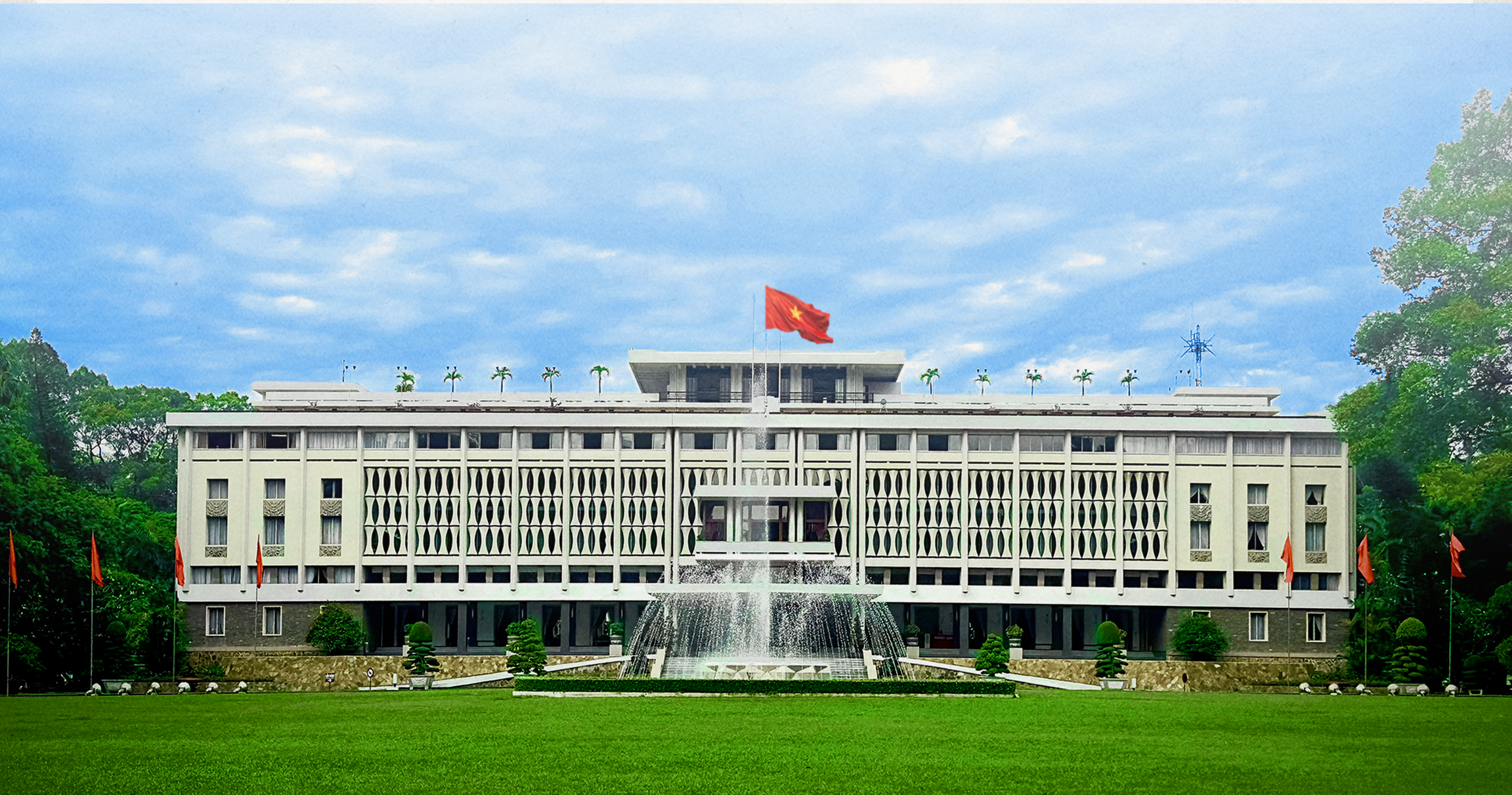
Independence Palace is a prominent tourist attraction and a top destination for visitors in Ho Chi Minh City. Photo: VGP/Le Anh
Located on Nam Ky Khoi Nghia Street, District 1, the Independence Palace broke ground on July 1, 1962, and was inaugurated on October 31, 1966. The Palace was built according to the design of Mr. Ngo Viet Thu, a French-educated architect.
The Palace occupies a footprint of 4,500 square meters, consisting of 3 main floors, 2 mezzanines, a rooftop, a ground floor, and a basement. The total usable area is 20.000 square meters, featuring over 100 rooms. Each room is decorated differently depending on its purpose, yet all remain in perfect harmony with the overall architecture of the mansion.


Large crowds of locals and tourists queue up to visit the Independence Palace. Photo: VGP/Le Anh
Independence Palace was officially put into use in 1966. In 1976, it was recognized as a National Historical and Cultural Site. The Palace officially opened its doors to tourists in 1990, and in 2009, it was ranked as a Special National Monument.
Over the years, the Independence Palace has consistently remained a top destination for visitors in Ho Chi Minh City. In 2024, the Independence Palace Management (Reunification Hall) reported welcoming nearly 1.5 million visitors.


Children holding flags, filled with excitement, line up to visit the exhibition rooms. Photo: VGP/Le Anh
To diversify the visitor experience, besides the Special National Monument itself, the Independence Palace Management (Reunification Hall) also organizes experiential spaces such as the “From Norodom Palace to Independence Palace” exhibition. Furthermore, they have developed a Heritage Discovery program for children aged 7 to 15 to learn about national history and culture while developing teamwork, presentation, and problem-solving skills.
Mr. Bui Huu Toan, Director of the Independence Palace Management, stated that in the coming time, the unit plans to apply technology in the preservation and promotion of the palace’s values. This includes digitizing exhibition spaces and artifacts, as well as applying technology in display and information interpretation to offer the public fresh historical narratives and experiential spaces, bringing the Independence Palace closer to the younger generation.


Several images of the rooms inside the Independence Palace. Photo: VGP/Le Anh
Snapshots captured by our reporters as visitors explore the Reunification Hall and Independence Palace during these historic days of April, heading towards the 50th Anniversary of the Liberation of the South and National Reunification.


Independence Palace serves as a “Red Address” for students of the People’s Security University and youth union members to learn about the nation’s history. Photo: VGP/Le Anh

Within the grounds of the Independence Palace, a large number of visitors take photos beside the two historic tanks, numbered 390 and 843. Photo: VGP/Le Anh

The front view of the Reunification Hall overlooks Le Duan Street, the venue for the upcoming 50th Anniversary of the Liberation of the South and National Reunification. The main grandstand in front of the Hall is currently under rapid construction.

Under the intense heat of Ho Chi Minh City in April, workers are actively constructing the grandstand for the 50th Anniversary of the Liberation of the South and National Reunification. Photo: VGP/Le Anh
![[Photo] Independence Palace – Preserving the imprints of history after 50 years of liberation](https://dinhdoclap.gov.vn/wp-content/uploads/2025/12/anh-dinh-doc-lap-noi-luu-giu-dau-an-sau-50-nam-giai-phong-9976.jpg)